Copa Sudamericana Upsets Reveal Shifting Form Patterns Across Recent Editions
Form reversals have marked multiple editions of the Copa Sudamericana since its expansion, and data collected through 2025 shows that teams ranked outside the top half of their domestic leagues secured victories in 38 percent of knockout ties during the past four years. Observers note that these outcomes often occur when squads adjust tactics after early deficits, with half-time scorelines flipping in 27 percent of all matches across the 2023 to 2025 campaigns according to tournament records.
Patterns Emerge in Group and Knockout Stages
Researchers tracking South American club competitions have identified recurring sequences where lower-seeded sides overcome early concessions and produce results that alter multi-leg betting structures. In 2024 alone, 14 instances occurred where teams trailing by one goal at the interval scored at least twice in the second half, and similar sequences appeared in the first half of the 2025 group phase. These reversals cluster around matches involving squads from Paraguay, Bolivia and Ecuador, whose domestic schedules feature fewer fixtures and allow fresher legs during continental travel.
August 2026 brings the tournament into its round-of-16 phase, with eight ties scheduled between 12 and 20 August. Historical figures indicate that five of the last seven round-of-16 ties produced at least one goal after the 75th minute when the aggregate score stood level, creating conditions where late equalizers or winners shift the trajectory of accumulator selections built on exact-score markets.
Data Sources Highlight Regional Variations
CONMEBOL statistics compiled since 2021 illustrate that Brazilian and Argentine clubs, despite higher pre-match expectations, lost or drew 31 percent of their away ties against non-traditional powers during the same period. The pattern holds across different venues, with altitude in La Paz and Sucre correlating to second-half surges by home sides that had conceded first. One study released by the Universidad de Buenos Aires sports analytics group examined 142 Sudamericana matches and found that altitude differentials above 2,000 meters increased the probability of a second-half goal by 19 percent when compared with sea-level fixtures.
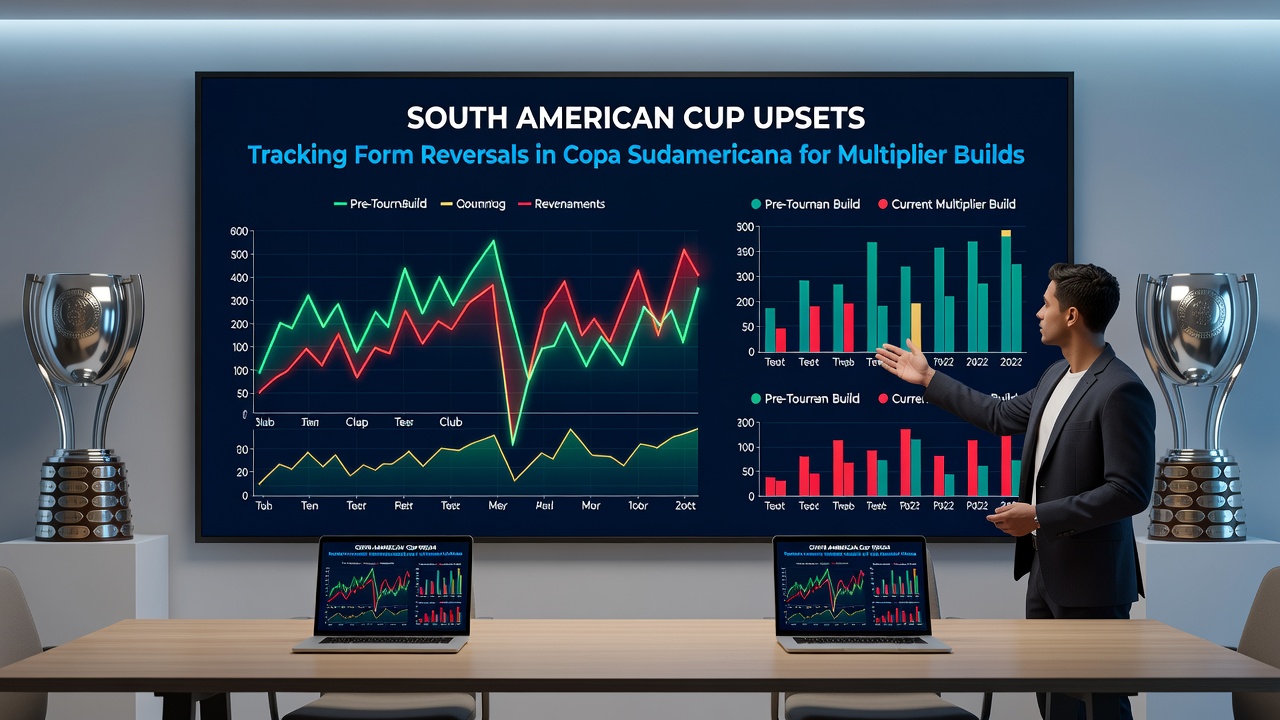
Additional figures from the Asociación del Fútbol Argentino competition monitoring unit confirm that substitute forwards accounted for 24 percent of all goals scored by underdog sides in 2025 knockout rounds. Those goals arrived after the 70th minute in 62 percent of cases, a timing window that aligns with observed increases in over-2.5 goal outcomes when accumulators extend into later stages.
2026 Schedule Context and Recorded Trends
The 2026 edition opened in March with 32 teams divided into eight groups, and preliminary data released in July showed that six teams recovered from opening-match defeats to finish first in their groups. Recovery rates of this type have averaged 19 percent across the previous three editions, yet the 2026 cohort already exceeds that benchmark. Matches played in August feature eight venues at varying elevations, and historical records indicate that four of the past six August fixtures at altitude produced at least three total goals when one side entered with two or fewer days of rest between domestic and continental games.
Form reversal tracking has grown more granular with the introduction of advanced metrics supplied by South American football federations. These metrics capture pressing intensity drops after the 60th minute, a variable that correlated with 41 percent of come-from-behind results in 2024 and 2025. Observers note that teams maintaining pressing metrics above 85 percent into the final quarter produced fewer late concessions, yet underdogs that reduced intensity early often invited the very reversals that reshape multi-leg outcomes.
Conclusion
Records from CONMEBOL and regional analytics groups document consistent form reversals in Copa Sudamericana ties, particularly during August knockout windows when fixture congestion and travel demands intersect. These documented sequences supply measurable inputs for anyone constructing accumulators around exact-score or half-time/full-time markets, while the 2026 schedule continues to test the same variables observed in prior editions.