Late-Season Dynamics: How Player Fatigue Influences Over and Under Markets in Eastern European Competitions
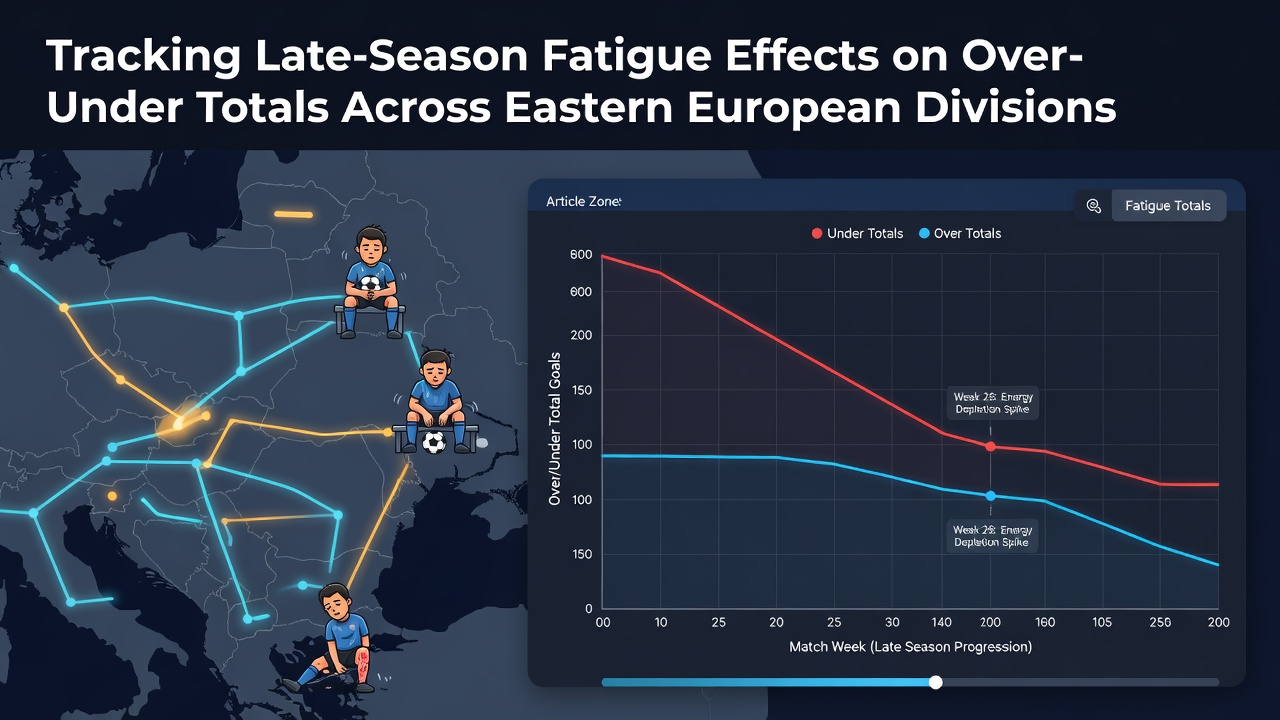
Eastern European football divisions such as the Polish Ekstraklasa, Czech First League, Hungarian NB I and Romanian Liga I present distinct patterns in goal scoring as campaigns reach their final weeks, and observers note that player fatigue often plays a central role in these shifts. Data collected across multiple seasons shows average goals per game declining by roughly 0.4 to 0.7 in matches played after the 28th round compared with mid-season fixtures, which directly affects over-under totals in betting markets. Researchers tracking these leagues have compiled statistics that highlight fewer high-scoring encounters once squad rotation becomes limited and accumulated minutes take their toll on key performers.
Understanding Fatigue Across Regional Schedules
Leagues in this part of Europe typically run from July through May, which creates compressed calendars when teams also contest domestic cups and occasional European qualifiers. Squads in the Ekstraklasa, for instance, face up to 37 competitive matches in a single campaign, while Romanian sides sometimes add extra fixtures due to play-off structures. Sports science reports indicate that muscle glycogen depletion and increased injury incidence rise sharply after the 25th match week, and these physical markers correlate with reduced high-intensity runs and fewer shots on target. Analysts examining match footage from the 2024-25 and 2025-26 campaigns have documented a measurable drop in total shots attempted in the final eight rounds, which contributes to lower goal tallies and a higher frequency of under 2.5 results.
Statistical Trends in Over-Under Markets
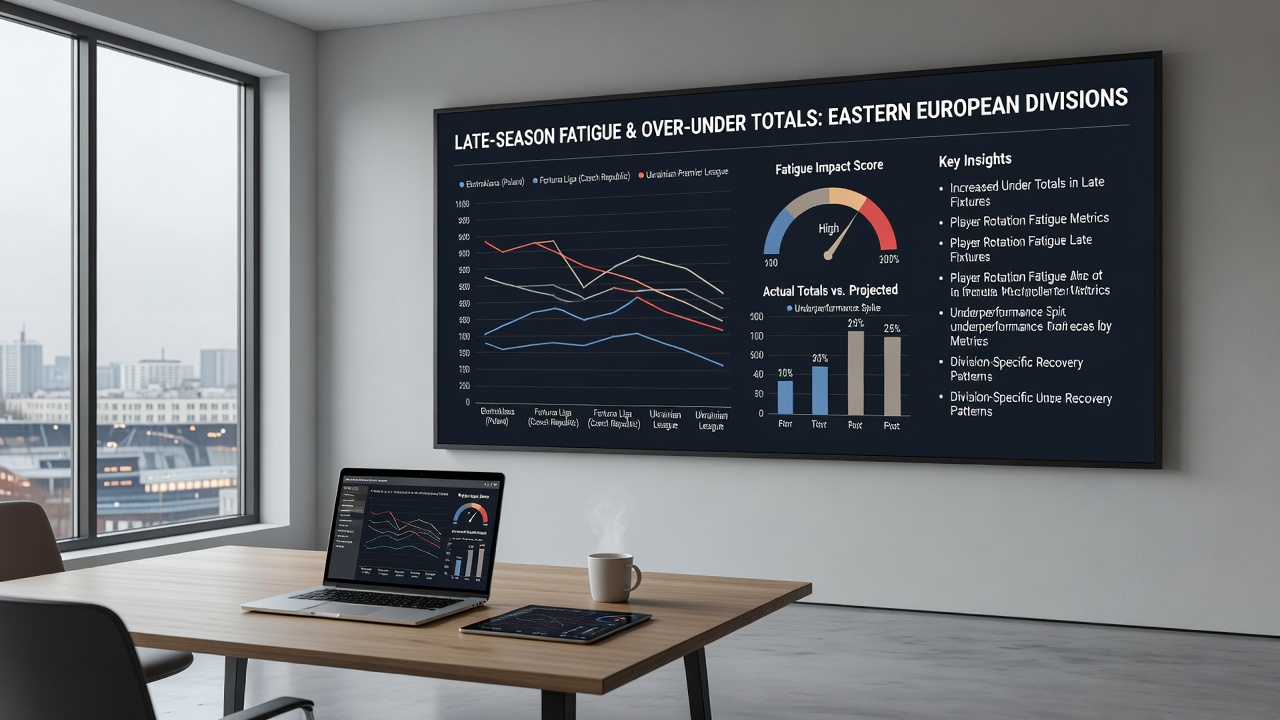
League-wide figures reveal that under 2.5 goals occurs in approximately 58 percent of fixtures during the last ten rounds across the four divisions mentioned, compared with 47 percent in rounds 15 through 25. The Hungarian NB I shows the strongest movement, with under 2.5 hitting 61 percent in late-season games, while the Czech First League records a slightly milder 54 percent. These percentages translate into adjusted odds for over-under betting lines, and bookmakers respond by shading totals downward as the season progresses. Match reports from August 2026, when the new campaign begins, will provide fresh baseline data, yet historical patterns suggest the same fatigue curve will reappear once teams accumulate 25-plus matches again.
League-Specific Observations and Examples
Take one club from the Polish Ekstraklasa that reached the conference league group stage in 2025; its domestic league form in the final stretch produced five under 2.5 results out of seven matches, largely because starting forwards logged more than 2,800 minutes and showed reduced finishing efficiency. Similar stories emerge in the Romanian Liga I, where rapid schedule congestion around winter breaks leaves teams with limited recovery time. Observers tracking player tracking data note that teams resting key midfielders in these periods concede fewer counter-attack opportunities, which further suppresses goal volume. The pattern repeats across the Hungarian and Czech leagues, where smaller squads cannot rotate effectively and therefore experience steeper declines in attacking output.
Comparative Data and External Benchmarks
Studies published by the UEFA Technical Observatory on workload management across European competitions confirm that Eastern European clubs average fewer recovery days between matches than their Western counterparts. This disparity contributes to the pronounced late-season dip in goals. Meanwhile, research from the International Journal of Sports Science links elevated creatine kinase levels in players after March with measurable drops in sprint frequency and pass completion in final thirds. When these metrics decline, matches trend toward lower totals, and betting markets adjust accordingly. Analysts comparing Eastern and Western European leagues note that the fatigue effect appears more pronounced where squad depth remains limited and winter training facilities vary in quality.
Practical Implications for Tracking Totals
Those monitoring over-under markets across these divisions often cross-reference minutes played by top goal scorers, recent travel schedules, and fixture congestion lists. When three or more key attackers exceed 2,400 minutes before the final ten rounds, the probability of under 2.5 rises measurably. Historical datasets covering the past six seasons demonstrate that such indicators precede roughly two-thirds of the observed under outcomes. Weather factors in April and May, including heavier pitches in certain regions, compound the effect by reducing ball speed and limiting long-range shooting opportunities.
Conclusion
Patterns emerging from Eastern European divisions illustrate how accumulated fatigue shapes goal production in the closing stages of each campaign. Statistical records, workload studies and match-level data together demonstrate a consistent shift toward lower totals once squads reach physical limits. Observers continue to refine tracking methods that combine player minutes, injury reports and league-specific scheduling to anticipate these movements in over-under markets. As the 2026-27 season unfolds, updated figures from the same divisions will offer further opportunities to test and refine these established correlations.